All Weather Mode: Weather Home
- 3.9
- Rating
- 500.00K
- Installs
- Free
- Price

 Analysis by App-foxy
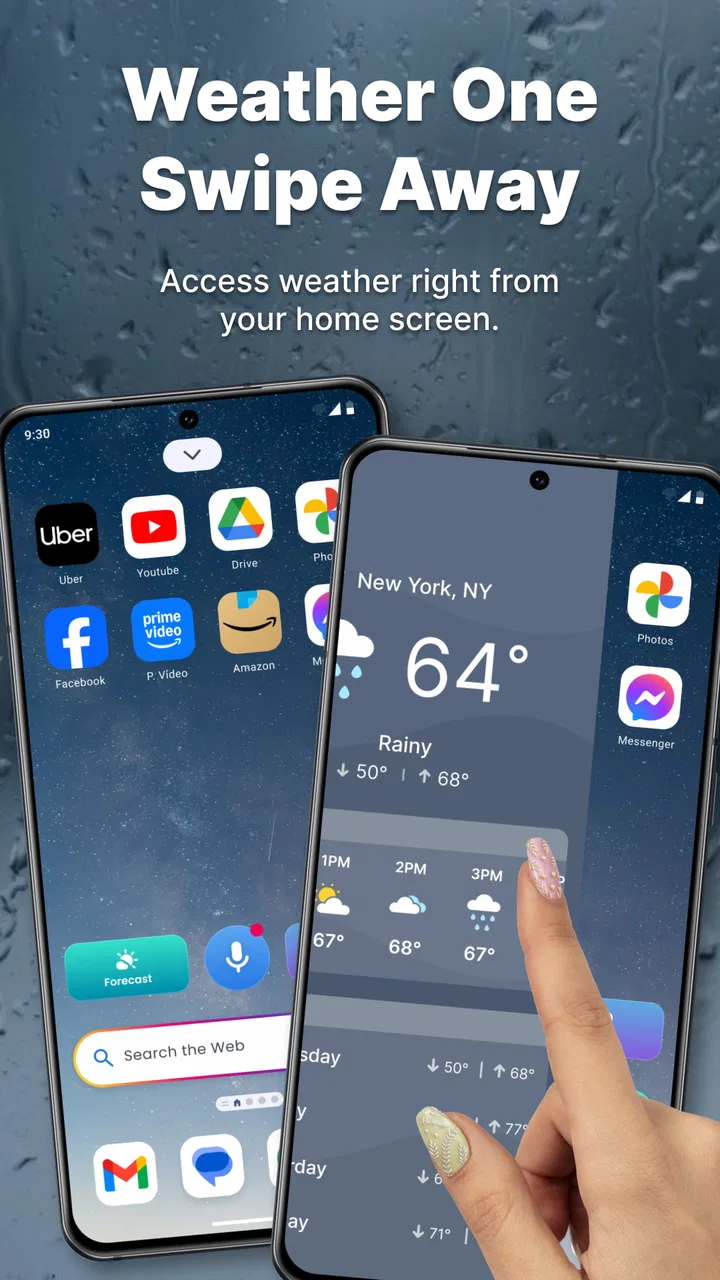
I tend to judge a weather app by what happens in the few seconds when I actually need it: stepping outside, checking the forecast before leaving, or glancing at my phone while deciding whether a jacket is worth carrying. All Weather Mode: Weather Home takes a slightly different route from a conventional forecast app. It belongs to the personalization category, combining weather access with a home-screen-oriented experience rather than treating the forecast as a destination I must open and browse.
That focus makes the app interesting for people who want weather information close at hand. It is free, aimed at everyone, and developed by Clarity App Crafting. The app reached users from its release on November 21, 2023, and its current version is 1.3.59. With more than 100,000 installs and a 4.1 average from roughly 435 ratings, it has enough real-world use behind it to feel like an established option rather than an experiment that has just appeared.
Weather that fits into the home-screen habit
My first impression is that this app is less about replacing every weather tool on a phone and more about reducing the distance between unlocking the device and seeing useful weather information. Its store summary presents it as a weather app and home screen, while the short description calls the experience “All Weather Mode.” In practical terms, that positioning matters: the value depends on whether you enjoy having weather integrated into the place where you already begin most phone tasks.
You May Also Like

 Blood Strike: 2.5 Anniversary
Blood Strike’s Loadouts Turn Every Drop Into a Tactical Gamble
A close look at Blood Strike’s custom loadouts: how fast access to signature weapons reshapes its battle royale rhythm, rewards preparation, and narrows the gap between fights.

 Pandora - Music & Podcasts
Pandora’s Music Is Easy to Start, but Harder to Recover
Pandora’s strength is its low-effort path from a seed to a station. Its weak spot is how much confidence it asks you to place in connection, setup, and quiet recovery.

 8 Ball Pool
 Is Built on Rivalries, Rematches, and Routine
A close look at the rivalries, rematches, shared routines, and unanswered safety questions that turn a quick pool match into a persistent mobile community.

 Samsung Music
’s Quiet Strength Is Playing What You Already Own
Its reach comes less from spectacle than from dependable access to a personal library. That simplicity is both the app’s strongest retention engine and its ceiling.

 AccuWeather: Weather Radar
AccuWeather Review: A Quick, Clear Forecast for Everyday Decisions
For everyday plans, the best forecast is the one you can understand quickly. AccuWeather makes rain timing, radar, and local conditions easy to act on, with a few trade-offs.

 Hill Climb Racing
Why Hill Climb Racing Still Turns Crashes Into One More Run
A tiny car, a bumpy hill and one more upgrade: Hill Climb Racing keeps resurfacing because its simple chaos makes every near-miss feel personal.
More From Our News Desk



Traditional weather apps usually ask me to open them, wait for the forecast view, and then decide which part of the information matters. That workflow is perfectly reasonable when I want detail. It is less convenient when I only need a quick answer. A home-screen-centered approach can be better for those small decisions because it makes weather part of the phone’s visual routine instead of another app icon competing for attention.
I would recommend trying it first as a glanceable tool, not as a replacement for every specialist forecast service. If you need a quick sense of current conditions before commuting, walking the dog, shopping, or choosing clothes, its concept is well matched to the task. If you regularly compare several forecast models, study hourly changes, or plan outdoor activities around precise weather windows, a dedicated forecasting application may still be the stronger companion.
Why connectivity is central to the experience
Weather is a network-shaped category. The usefulness of a weather display depends on current information, and the most important moments often happen when I am in a hurry and expect the screen to refresh without fuss. In that situation, the app’s home-screen role creates a clear trade-off: convenience is high when the information is available, but any delay in updating becomes more noticeable because the weather view is meant to be immediate.
I found it helpful to think of the home screen as an entry point rather than a guarantee that every glance will contain freshly updated conditions. When I had a stable connection, the concept worked naturally: unlock the phone, look at the weather area, and continue with whatever I was doing. When connectivity was inconsistent, I became more aware of the difference between seeing a weather display and knowing exactly when that display was last refreshed.
This is an important distinction for anyone choosing the app. A visual weather surface can make checking conditions feel effortless, but it should not encourage careless decisions during rapidly changing weather. For ordinary planning, the quick view is convenient. For a long drive, a hike, a flight connection, or a work shift that depends on conditions, I would still open the weather information fully and check it carefully before leaving.
A realistic morning routine
Imagine a weekday morning when I am already dressed, holding coffee, and deciding whether to walk to the station. I do not necessarily need a long forecast discussion. I need a fast indication of the conditions and whether the day looks comfortable enough for the plan. A home-screen weather experience suits that moment because it removes the extra step of searching through the app drawer.
The same pattern works when I am leaving a supermarket, checking the phone before cycling, or deciding whether to carry an umbrella. These are not situations where I want to study weather maps. They are small decisions made repeatedly throughout the day. The app’s strongest idea is that weather belongs in those brief pauses, where a glance can be more useful than a detailed session.
There is also a subtle behavioral benefit. Because the weather is placed near the beginning of the phone experience, I am more likely to check it before committing to a plan. That can be more practical than relying on memory from an earlier forecast. The limitation is that a home-screen view can become visual background after a while. If I stop noticing it, its convenience advantage becomes less meaningful.
Using it on the move
The mobile context is where the design idea makes the most sense. I often check weather while standing at a bus stop, walking between buildings, or preparing to leave a café. Those moments favor speed and clarity over a large collection of controls. A weather home screen can serve that need better than an app that opens into several tabs, charts, alerts, and promotional panels before showing the basic information.
At the same time, phones are used in places where connections vary. Underground transport, crowded venues, elevators, rural roads, and buildings with poor reception can all interrupt the normal rhythm of a connected weather experience. I would not build an important outdoor decision around the assumption that a current view will always appear instantly. My practical habit would be to check before entering a low-connectivity area, especially if the forecast matters for the next few hours.
The app is also more appealing to people who want personalization without spending time configuring a complicated dashboard. Its placement in the personalization category reflects that broader role. It is not simply a forecast page; it changes how weather participates in the phone’s everyday surface. That can feel more useful than a separate app for users who prefer information to be visible as part of their regular setup.
Where the experience can slow down
Connectivity problems are not the only possible source of friction. A home-screen experience has to fit comfortably into the rest of the phone, and some users may prefer their existing layout exactly as it is. Anyone who treats the home screen as a carefully organized workspace may see a weather-focused setup as unnecessary visual competition. In that case, the app’s central strength could feel like an intrusion rather than an improvement.
I also think the app asks users to decide how much weather information they want at a glance. A compact display is excellent for quick awareness, but compact information cannot replace detailed context. If I want to understand how conditions may shift through the afternoon, I need a deeper view than a single glance. The app makes sense when the home screen is the first layer of checking, not when I expect it to perform the entire job of a specialist forecast service.
Another consideration is habit. People who already have a reliable weather widget or a built-in weather shortcut may not notice enough difference to justify changing their routine. The advantage here is not that every other option is unusable; it is that this app presents weather as a more central part of the phone experience. The switch is worthwhile when that arrangement feels more natural to you.
Recovering from a missed or delayed update
When a weather view does not look current, my first response is not to trust it blindly. I check the connection, give the app a moment, and then look again before making a weather-sensitive choice. That simple workflow is especially important with any connected weather product. A delay does not automatically make the app poor, but it does change how confidently I should interpret what is on screen.
I would also avoid treating the home-screen display as a substitute for checking conditions after a major change in the day. If I move to a different area, travel across town, or notice that the sky no longer matches what I saw earlier, I would refresh my understanding rather than relying on the first glance. This is a useful way to enjoy the app’s convenience without turning convenience into overconfidence.
For everyday recovery, the best approach is to keep the app in its proper role: a fast awareness layer. If the display is slow, I can postpone the decision, reconnect, or use another trusted weather source for the specific situation. That flexibility is one reason I would pair it with common sense rather than make it the only weather reference on a phone used for serious outdoor planning.
Keeping quick checks from becoming wasteful
Frequent weather checks can create a small but noticeable tension between convenience and data use. A home-screen weather experience encourages more glances because the information is always close. On an unlimited connection, that may not matter much. On a restricted mobile plan, while roaming, or in an area with expensive data, I would be more deliberate about when I need a refresh instead of repeatedly checking out of habit.
My practical tip is to use the home screen for decisions that genuinely benefit from current information, such as leaving for work or choosing outdoor clothing, and avoid refreshing simply because the phone is already in my hand. If I know I will be away from a strong connection, I would check the forecast before leaving and remember that a later glance may not represent a newly updated view.
This is not a criticism unique to this app; it is part of the connected weather category. However, the app’s placement makes the trade-off easier to overlook. The more seamless the experience feels, the easier it is to forget that current weather information depends on communication between the phone and the service behind it. I appreciate the convenience, but I would still use it with a little awareness of my connection and plan.
Who will appreciate it most
I see the best fit as someone who wants weather available during normal phone use rather than hidden behind a separate app. It suits commuters, students, parents organizing short trips, casual walkers, and anyone who makes lots of small weather decisions. It can also appeal to people who enjoy adjusting the feel of their device and want practical information to be part of that personalization.
The app is less compelling for a user who wants a highly technical forecast workspace. If your routine depends on detailed hourly planning, comparisons between locations, specialized outdoor information, or extensive weather history, you may prefer a dedicated service with a deeper analytical interface. Likewise, if you strongly prefer a minimal home screen and already have a trusted weather shortcut, the change may not feel worthwhile.
Its Everyone content rating makes it approachable for a broad audience, and the free price removes the usual barrier to trying it. I would still judge it by whether the home-screen approach matches my habits rather than installing it only because it costs nothing. Free access makes experimentation easy, but the real question is whether I notice weather sooner and make better everyday decisions with it in place.
My view after weighing convenience against certainty
All Weather Mode: Weather Home is most successful as a connected, glance-first weather experience. I like the idea of putting weather where I already look, and I can see genuine value in reducing the number of steps between unlocking the phone and deciding what to do next. The app has a clear identity within personalization instead of trying to be an indistinguishable copy of a conventional forecast screen.
Its main limitation is equally clear: a quick home-screen view is not the same thing as a complete weather investigation, and connectivity can affect how confidently I interpret what I see. I would use it for routine awareness, then switch to a more detailed weather tool when the decision carries more weight. That combination gives the app a sensible place in my phone without asking it to solve every forecasting need.
With a 4.1 average across roughly 435 ratings and over 100,000 installs, it has attracted a meaningful audience, while its current version, 1.3.59, shows that the project is still being maintained as a current app experience. My recommendation is straightforward: try it if you want weather information woven into your home-screen routine, especially for quick daily choices. Skip it if you need a specialist forecast dashboard or dislike changing the way your home screen is organized.
In the end, the app’s value depends less on dramatic features and more on timing. When the connection is working and I only need a fast sense of the day, it can be genuinely convenient. When I need precision, resilience in poor reception, or deeper context, I would use something more specialized. That balance makes it a useful personalization app for casual, connected weather checking, rather than a universal replacement for every alternative.
FAQs for All Weather Mode: Weather Home
01What features does All Weather Mode: Weather Home offer?
All Weather Mode: Weather Home provides real-time weather updates, detailed forecasts, and customizable alerts. It includes interactive radar maps, severe weather warnings, and a sleek, user-friendly interface. Users can personalize their experience with different themes and widgets, making it easy to stay informed about weather conditions in their area.
02Is All Weather Mode: Weather Home free to download and use?
Yes, All Weather Mode: Weather Home is free to download and use. However, it may offer in-app purchases or premium features that enhance the overall experience, such as ad-free usage or additional customization options. Users should check the app store for specific details on pricing and features.
03How accurate are the weather forecasts in All Weather Mode: Weather Home?
The app uses advanced meteorological data and cutting-edge technology to provide accurate and timely weather forecasts. It sources information from reputable weather services to ensure reliability. Users can trust the app for daily forecasts, severe weather alerts, and real-time updates, making it a dependable choice for weather monitoring.
04Can I customize the notifications in All Weather Mode: Weather Home?
Yes, All Weather Mode: Weather Home allows users to customize notifications based on their preferences. You can set alerts for severe weather, daily forecasts, or specific conditions like rain or snow. The app's flexibility with notifications ensures you receive only the information that is most relevant to you.
05Is All Weather Mode: Weather Home available on both Android and iOS?
Absolutely, All Weather Mode: Weather Home is available for both Android and iOS platforms. This ensures compatibility with a wide range of devices, allowing users to access weather updates and forecasts regardless of their device preference. Check the respective app stores for availability and download options.
Pros
- Intuitive and user-friendly interface.
- Accurate real-time weather updates.
- Customizable alerts for severe weather.
- Minimal battery consumption.
- Supports multiple locations tracking.
Cons
- Contains occasional ads.
- Limited free features.
- Requires internet for full functionality.
- Some settings can be hard to find.
- May slow down on older devices.

All Weather Mode: Weather Home
Gallery